
Last updated November 24, 2026
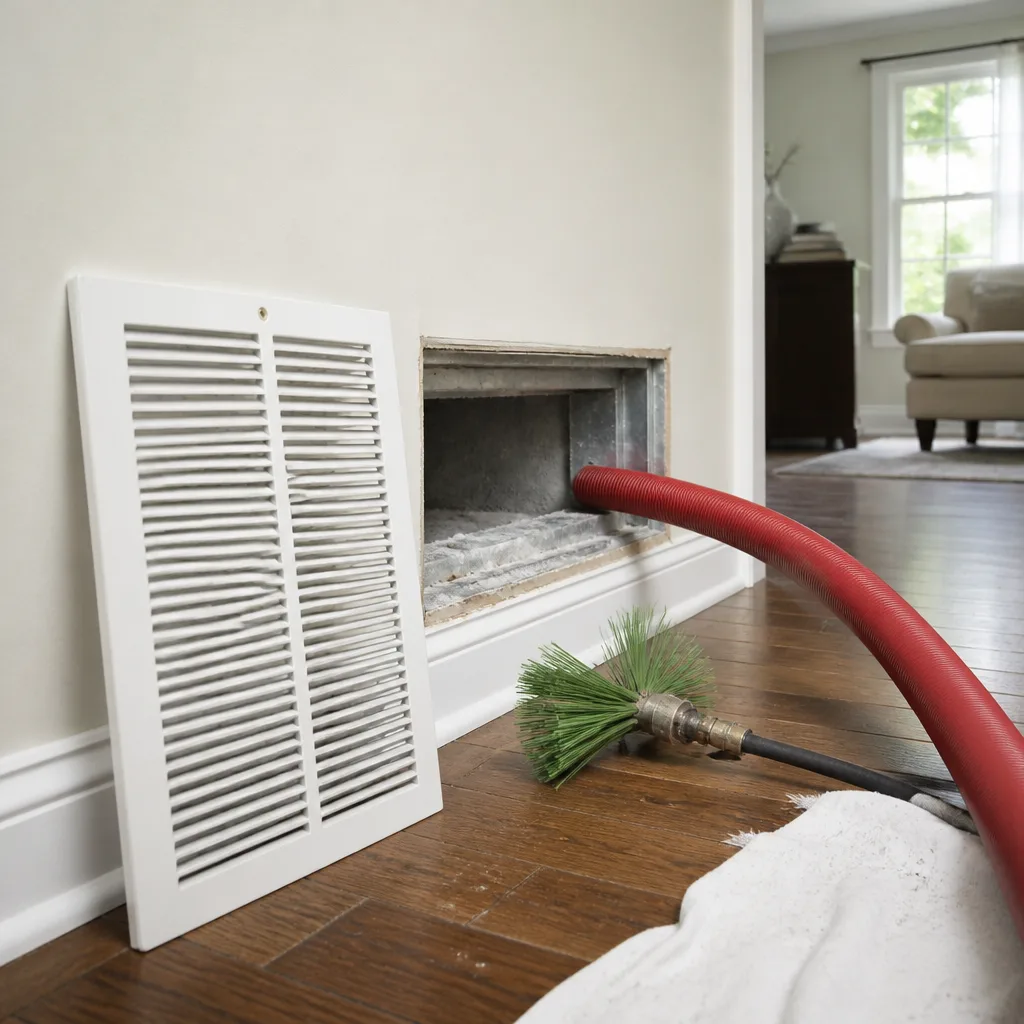 Whole-home duct cleaning
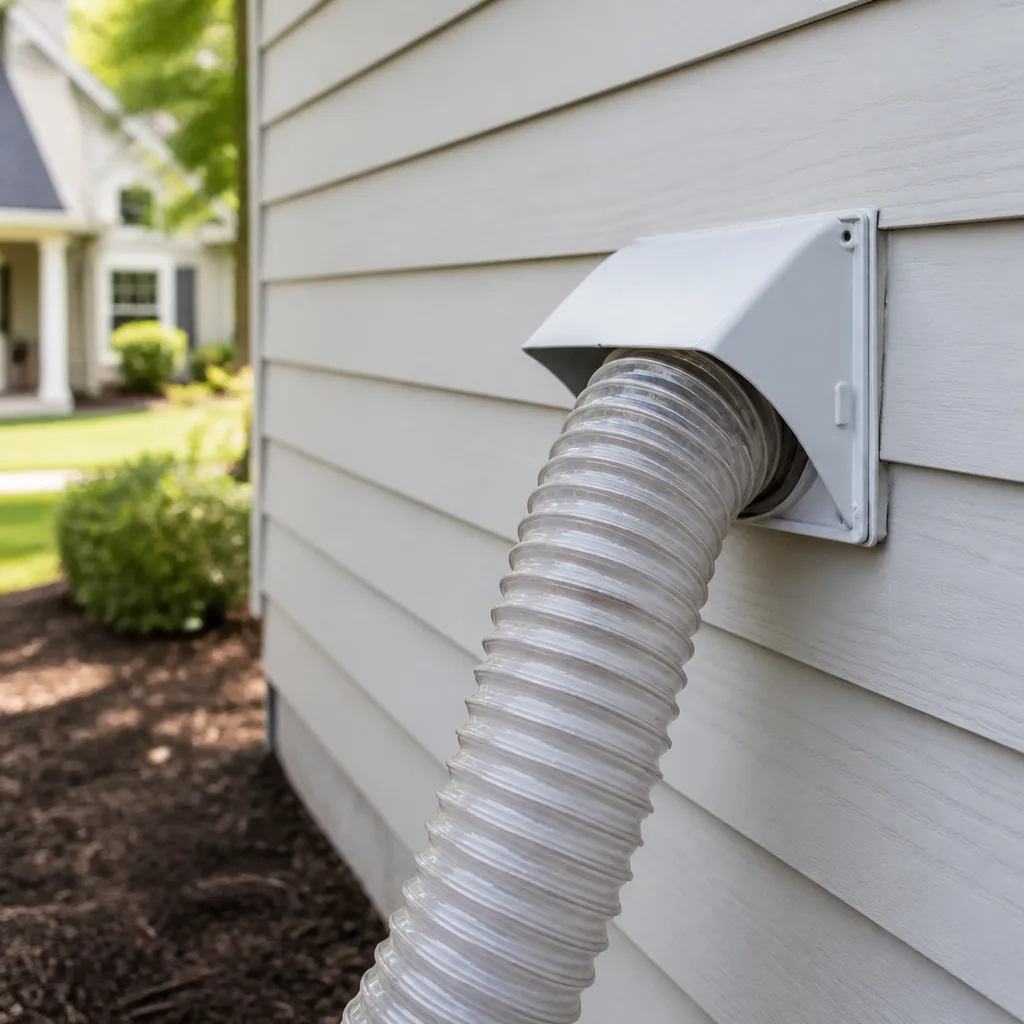 Dryer vent cleaning
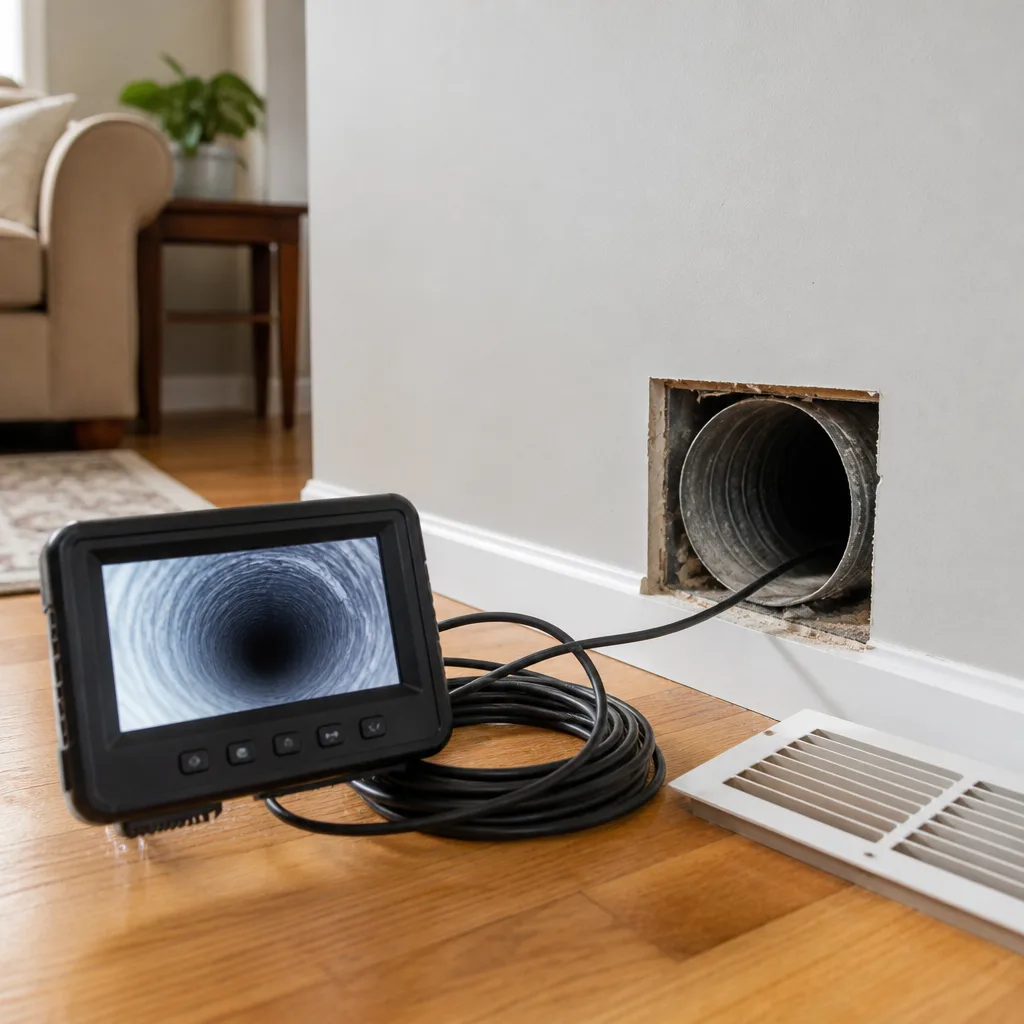 Camera inspection
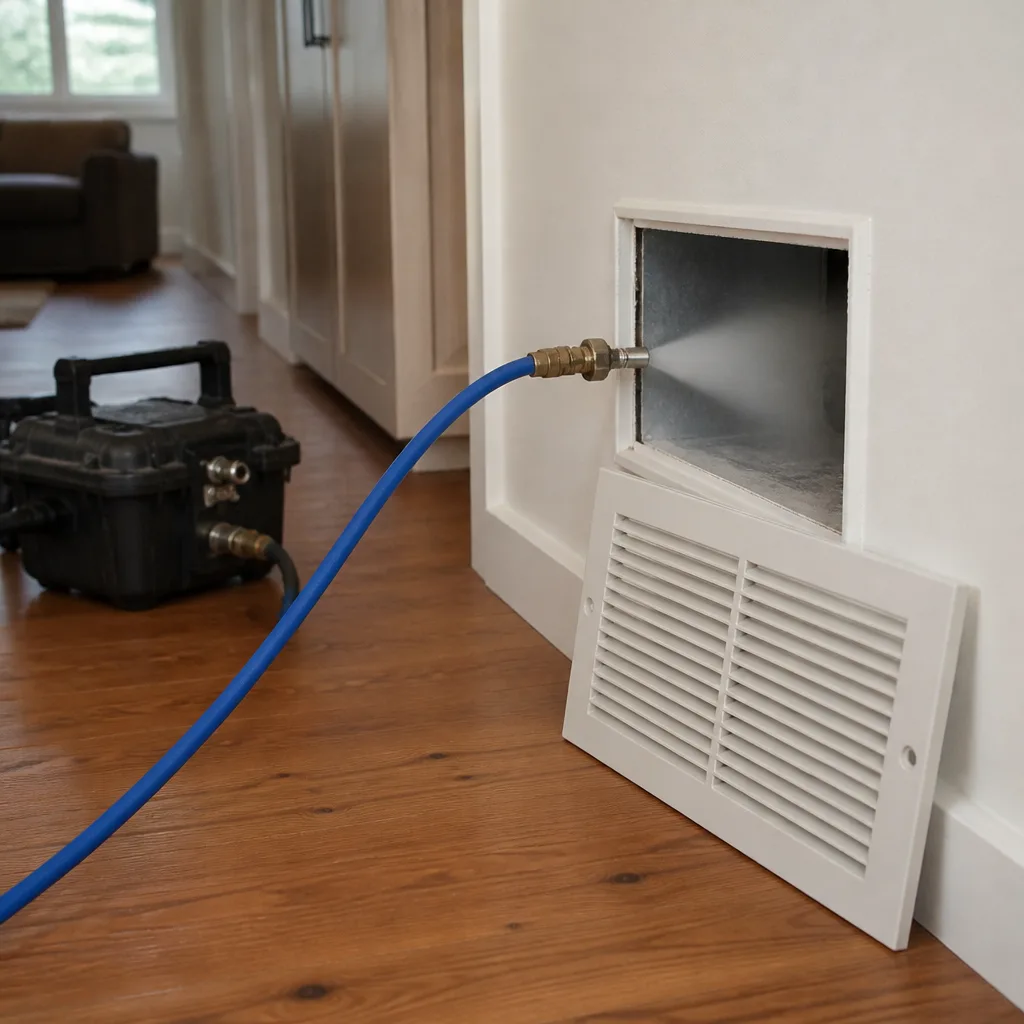 Sanitizing & deodorizing
Whole-system duct and dryer vent check with before-and-after photos - you see exactly what came out of your vents
That "$99 whole-house special" is a bait ad - the real number appears once they are in your hallway, or the "clean" is a shop-vac at the register. We photograph the inside of your ducts before and after instead.
The Complete Guide to Air Duct Cleaning in Highlands Ranch
Most people think of duct cleaning as one thing: a truck shows up, a hose goes into the vents, and forty minutes later it’s done. That single-event picture is the biggest reason so much of it is done badly. A 2,400-square-foot Highlands Ranch home typically has 18 to 24 duct openings, and a surprising number of “cleanings” touch maybe six of them before the invoice gets signed. The ducts aren’t a set of separate holes in the floor, either. They’re one connected air pathway, and treating part of it is often worse than leaving it alone, because the grime you dislodge upstream ends up in the rooms you breathe in. This guide maps that whole pathway, component by component, and explains what a genuinely complete job in Highlands Ranch actually touches.
Quick Answer
Air duct cleaning in Highlands Ranch means contact-cleaning the inside of every supply duct, every return duct, the air handler, blower, coil, and drain pan, then containing the debris with HEPA-rated negative-air equipment so none of it recirculates. It is not a quick vacuum of the visible registers. A complete job reaches all the openings, verifies the result with before-and-after photos and airflow readings, and addresses leaky joints that would otherwise undo the work within weeks.
Styles & brands we work with
- Whole-home duct cleaning
- Dryer vent cleaning
- Camera inspection
- Sanitizing & deodorizing
Table of Contents
- The Full Air Pathway: What Actually Needs Cleaning
- A Component-by-Component Breakdown
- Why Highlands Ranch’s High-Altitude Dry Climate Accelerates Duct Dust
- Contact Cleaning vs. Source-Removal Methods: What the Standards Require
- Why Cleaning Without Sealing Can Undo the Whole Job
- How to Verify the Job Was Actually Done
- What a Complete Cleaning Looks Like, Step by Step
- How Much Does Air Duct Cleaning Cost in Highlands Ranch?
The Full Air Pathway: What Actually Needs Cleaning
Air in your Highlands Ranch home doesn’t travel through your ducts so much as it cycles through them. It’s pulled in through return grilles, drawn down to the air handler, pushed across the blower and coil, then delivered back out through supply registers in every room. Everything in that loop touches everything else. Debris that settles in a return trunk gets lifted and carried across the coil. Whatever accumulates on the coil gets blown out the supply side. That’s why cleaning one segment in isolation just moves the problem around.
Picture the pathway as five connected zones:
- Return grilles and return ducts – the intake side, where lint, hair, and pet dander gather first.
- The air handler cabinet – the fan box that houses the blower and often the filter rack.
- The blower wheel – the spinning component that moves air, and a magnet for fine dust.
- The evaporator coil and drain pan – where moisture lives and where biological growth can take hold.
- Supply trunks and branch runs – the delivery side, feeding each register.
Cleaning only the supply registers, which is what the cheapest jobs tend to do, leaves the return side and the air handler untouched. That upstream load keeps feeding the system the moment the fan kicks on. In our experience, the return side and the cabinet are usually the dirtiest parts of a Highlands Ranch system, and they’re exactly the parts a surface-level job skips. If you want the whole picture of how we approach the full route, see our page on air duct cleaning.
For most homes with an unknown service history, the pathway is best treated as a single unit. Either the whole loop gets cleaned and sealed, or the money is better spent elsewhere.
A Component-by-Component Breakdown
Each part of the air pathway calls for a different tool and a different technique. That’s the detail most homeowners never hear, because a single hose-and-vacuum setup can’t handle all of it well. Here’s what each component requires and why.
Supply and Return Ducts
Duct walls collect a bonded layer of dust, dander, and construction residue that air alone won’t lift. The right tool is a rotating brush head on a flexible whip, run down the full length of each run. Rotobrush contact-cleaning systems do this: the brush physically agitates debris off the duct wall while a vacuum pulls it back through a contained hose. Air-only or “blow-and-go” methods skip the physical contact and just stir the top layer. The difference shows up in the photos.
The Air Handler and Blower
The air handler cabinet is the central hub, and the blower wheel inside it acts like a fan blade in a dusty room. Fine particles cling to the blades, throwing the wheel out of balance and cutting airflow. The blower needs to be cleaned in place or removed and cleaned, depending on accessibility, with careful HEPA vacuuming around the motor. We deploy Nikro HEPA-rated vacuum equipment here specifically so dislodged particles get captured instead of pushed downstream.
The Evaporator Coil and Drain Pan
The coil is a dense fin array that condenses moisture out of the air, which makes it the wettest, most biologically active spot in the system. Dust that settles there mixes with condensation and can support mold growth. The coil needs a careful cleaning that doesn’t bend the fins, and the drain pan beneath it needs to be flushed so standing water doesn’t become a reservoir. For jobs involving visible growth or heavy debris, we bring Abatement Technologies containment and filtration equipment, which is built for serious contaminant scenarios rather than routine dust.
Registers, Grilles, and Boots
Every register face, grille, and the boot that connects it to the branch run needs to come off or be cleaned thoroughly in place. These are the parts a homeowner sees, and the ones the cheapest jobs spend all their time on. They’re the last 5% of the work, not the whole of it.
The point across all of these: different components, different tools. A job that uses one tool for everything is telling you something about its depth.
Why Highlands Ranch’s High-Altitude Dry Climate Accelerates Duct Dust
Highlands Ranch sits at roughly 5,900 feet above sea level, on the dry eastern edge of the Front Range. That combination changes how dust behaves inside a house. Compared to lower-elevation Front Range cities like those down toward Denver or the northern suburbs, the air here holds less moisture, and dry air is a poor settling agent. Dust, dander, and fine particulates stay airborne longer and get pulled into the return system instead of drifting to the floor. More of what your house sheds ends up in the ducts.
The dry climate also pushes homeowners toward higher run times on evaporative and humidification equipment and leaves duct joints and seams more prone to minor separation as materials dry and contract through seasonal swings. In Highlands Ranch, that means the dry season grit and the winter heating cycle both load the pathway faster than they would at lower altitude. Fine dust that never gets airborne as easily in humid cities is a constant cycling passenger here.
Practically, that shifts the maintenance conversation:
- Homes with pets, or households dealing with allergies or asthma, tend to notice the return side loading up within a couple of seasons rather than several.
- Recent renovations push drywall dust and sawdust straight into the return, which is one of the faster ways to coat the blower and coil.
- A newly purchased home with unknown duct history needs a full look before you trust the air, because the previous owner’s maintenance habits are a mystery.
- Duct joints and seams that have dried and pulled slightly open will leak conditioned air and pull in garage or attic air, which is exactly what sealing is for.
None of this argues for cleaning on a fixed calendar. It argues for cleaning based on what the system actually looks like and how it’s loaded. But if you’ve been in a Highlands Ranch home for several years without a real service, the climate has been working against the ducts the whole time.
Contact Cleaning vs. Source-Removal Methods: What the Standards Require
There are two broad approaches to duct cleaning, and the difference between them explains why quotes in Highlands Ranch vary so widely. One is contact cleaning, which uses a physical tool to agitate debris off the duct surface. The other is negative-air, or source-removal, which uses vacuum pressure to pull and contain that debris at the source. A job done right uses both together.
What contact cleaning does
Contact methods run a rotating brush or whip down each duct run so the tool physically touches the duct wall. The industry standard, as set by the National Air Duct Cleaners Association (NADCA), calls for source removal: the debris has to be dislodged from where it’s bonded and then captured, not just loosened and left to drift. Rotobrush rotary contact-cleaning systems are built for exactly this, using a brush head and a contained vacuum hose so agitation and capture happen in the same pass.
What negative-air and HEPA containment do
Negative-air pressure means the cleaning area is kept at lower pressure than the surrounding house, so air flows into the work zone rather than out of it. HEPA-rated vacuums filter the captured air to trap fine particles. Nikro HEPA vacuum systems are what we use to hold that pressure and pull contaminants out at the source instead of redistributing them. Without this piece, dislodged dust has nowhere to go but back into the room. That’s the reason “vacuum-only” jobs don’t achieve much: they lift material without containing it.
Why the source-removal standard matters
NADCA’s guidance is clear that a complete job means cleaning the entire system, not a subset of it. That includes the air handler, blower, coil, and drain pan alongside every duct run. A crew using only a shop vac and a hose can agitate dust, but it can’t maintain negative pressure across the system or guarantee that what’s loosened gets captured. When you compare quotes, ask which method and which equipment are being used on your home. A number without that detail is meaningless.
For a look at how we handle the air-handling side specifically, see HVAC cleaning.
Why Cleaning Without Sealing Can Undo the Whole Job
Here’s where a lot of duct cleaning falls apart within a few weeks or months. If the ductwork has leaky joints, seams, or disconnected sections, cleaning the inside does nothing to stop outside air from getting back in. In a Highlands Ranch home, that outside air carries garage exhaust, attic dust from insulation and construction, and whatever the dry climate has been blowing around. The moment the fan runs, the system pulls it back into the pathway. A clean duct with an open seam is a clean duct for about a month.
Repair and sealing belong in the same service visit as cleaning, not as a follow-up upsell. What that involves depends on where the leaks are:
- Inspect the accessible runs – the return trunks, the branch connections behind registers, and the joints near the air handler are the usual suspects.
- Identify separation and gaps – visual inspection plus a look for telltale streaks of dust pulled in around seams, which show where air is leaking.
- Seal the joints – sealing the leaking seams after cleaning keeps the pathway closed and stops the reintroduction of outside debris.
- Confirm airflow after sealing – sealing sometimes reveals a system that was relying on a leak for static pressure, so readings should be checked afterward to confirm airflow is still healthy.
This is the single reason we keep repair and sealing in the same house call as cleaning. One crew, start to finish, on every component of the pathway, means the work doesn’t come undone while you wait for a second contractor to show up.
How to Verify the Job Was Actually Done
You don’t have to be able to take a system apart to know whether it was cleaned properly. You just have to know what documentation to ask for. In a dry, dusty place like Highlands Ranch, a legitimate job leaves a trail you can check.
- Before-and-after photos of your own ducts. Not stock images, not someone else’s kitchen. Actual shots of the return trunk and a couple of supply runs, before cleaning and after. If a company can’t produce these, you have no evidence of what happened.
- Airflow readings. Static pressure and airflow numbers taken at the air handler before and after, so you can see whether the blower and coil cleaning actually improved flow.
- A post-service inspection of the hard-to-reach components. The blower wheel, coil face, and drain pan are the parts that prove whether a crew went deep. Ask directly whether they were cleaned and whether there’s a photo to show it.
- Confirmation that all openings were serviced. Ask how many registers and returns your home has, and how many were cleaned. If the count of cleaned openings doesn’t match the number in the house, the pathway wasn’t fully covered.
- Sealing noted in the report. If leaks were found and sealed, that should appear in writing with the locations.
A company that expects you to take its word for it is exactly the one to be wary of. Ask for the photos and the readings. A thorough job can prove itself.
What a Complete Cleaning Looks Like, Step by Step
Because so many homeowners have never seen a full job, here’s the sequence we run on a Highlands Ranch system, from arrival to sign-off.
- Set up protection. Guardsman surface-protection products go down to protect floors and nearby surfaces before any equipment comes in. This is a small detail, but it’s the difference between a crew that respects the house and one that leaves a mess.
- Establish negative pressure. Nikro HEPA vacuum equipment is connected and running before any cleaning begins, so the work zone stays under negative pressure from the first brush pass to the last.
- Clean every duct run. A Rotobrush rotary contact-cleaning head runs through each supply and return, agitating debris off the duct wall while the HEPA vacuum captures it. Every opening gets done, not a sample of them.
- Clean the air handler, blower, coil, and drain pan. Each gets its own attention, with the coil cleaned carefully to avoid fin damage and the pan flushed so it drains freely.
- Address the filtration. If the filter housing and filter are due for an upgrade, we can recommend and install Honeywell and Aprilaire filtration products on the spot, since the crew is already there and knows the system.
- Repair and seal leaks. Any separated joints or seams get sealed before the job closes, so the newly cleaned pathway stays closed.
- Document the result. Photos and airflow readings are taken and handed over, so you can see exactly what was cleaned and what changed.
For jobs with mold, heavy debris, or a post-remediation situation, Abatement Technologies containment equipment is added to the setup so the air pathway handling matches the severity of the load.
How Much Does Air Duct Cleaning Cost in Highlands Ranch?
Air duct cleaning in Highlands Ranch typically costs somewhere around $350 to $900 for a full-home contact-and-containment service, and repair or sealing of leaky joints usually adds roughly $150 to $450 depending on how many runs need attention. The exact price is set by the written estimate after the system is looked at, because the number of openings, the condition of the components, and whether sealing is needed all vary from house to house. One flat price per system, agreed before work starts, is how it should read.
Here’s how the ranges tend to break down for a typical Highlands Ranch home:
| Service | Typical range |
|---|---|
| Full-system duct cleaning (all supply and return runs) | $350 – $650 |
| Air handler, blower, coil, and drain pan cleaning | Included or $100 – $200 as a separate line |
| Duct repair and sealing of leaky joints | $150 – $450 |
| Air quality sanitizing add-on | $100 – $250 |
| Filtration upgrade (Honeywell or Aprilaire product installed) | Quoted per unit |
Those are estimates, not final prices, and the written estimate is what sets the number. The biggest cause of unpleasant surprises in this trade is a low teaser price that balloons once the technician is on site. That’s why we quote one flat price per system before anything starts. Call (833) 513-8872 for an exact quote, free estimate, and we’ll walk you through what your specific system needs.
If your dryer vent hasn’t been cleared in a while, that’s a separate safety item, and you can read more on our dryer vent cleaning page.
Common Mistakes to Avoid
- Cleaning only the supply registers. This is the most common shortcut and the least useful one. It leaves the return side and air handler untouched, which keeps feeding the system with debris the moment the fan runs.
- Accepting a per-vent price. Per-vent pricing encourages cleaning only a handful of openings and calling it done. In a Highlands Ranch home with 18 to 24 openings, that math often means two-thirds of the pathway never gets touched.
- Trusting a job with no photos or readings. If you can’t see before-and-after shots of your own ducts and airflow numbers, you have no way to know what was done. Ask for both.
- Cleaning without checking the joints. A clean system with open seams pulls outside air, including attic dust and garage exhaust, right back into the pathway. Sealing is part of the job, not a separate one.
- Ignoring the coil and drain pan. These are the wettest, most biologically active parts of the system. Cleaning ducts while skipping them leaves the source of moisture and growth in place.
- Using a shop-vac setup as a “professional” clean. Without HEPA capture and negative pressure, dislodged dust has nowhere to go but back into the room. Verify the equipment before you book.
- Assuming a new home needs no cleaning. Renovation dust and unknown prior maintenance make a recently purchased Highlands Ranch home one of the strongest candidates for a full inspection and cleaning.
See the difference
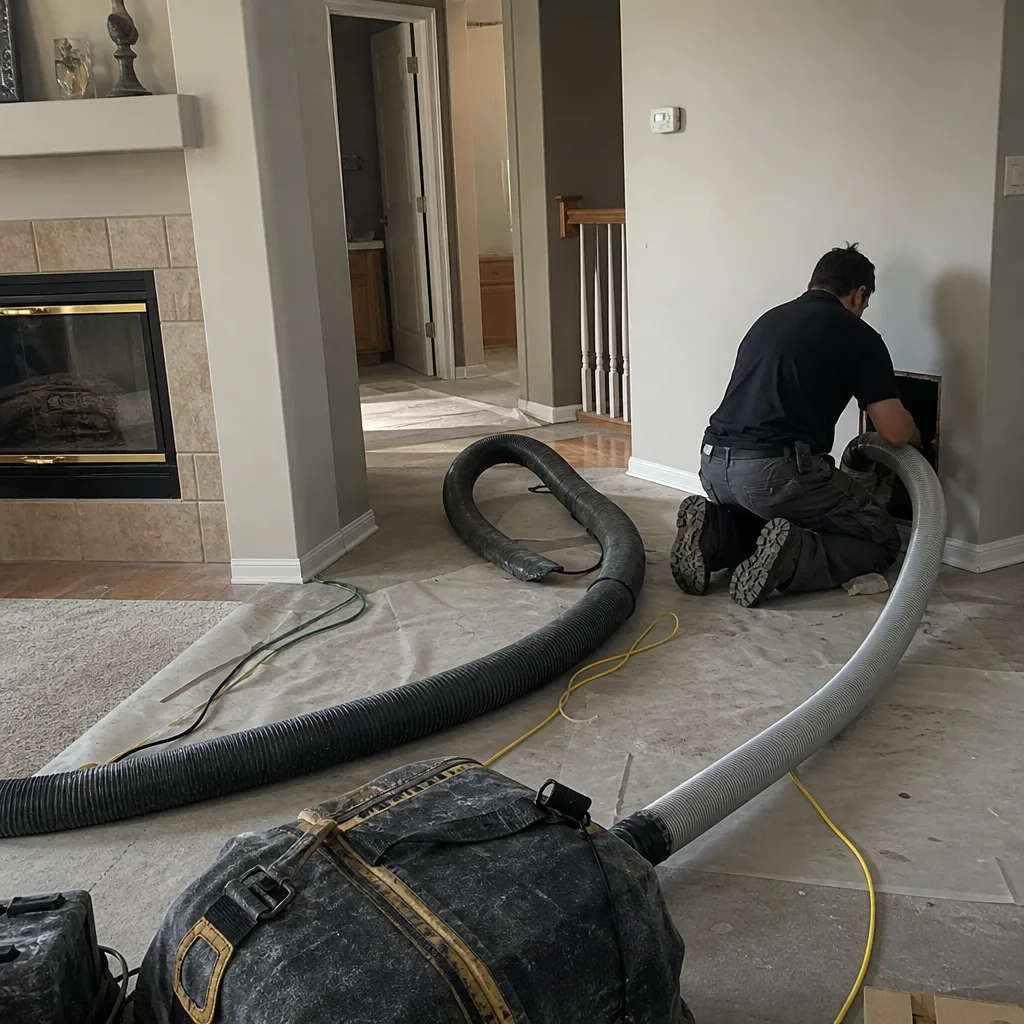 Before
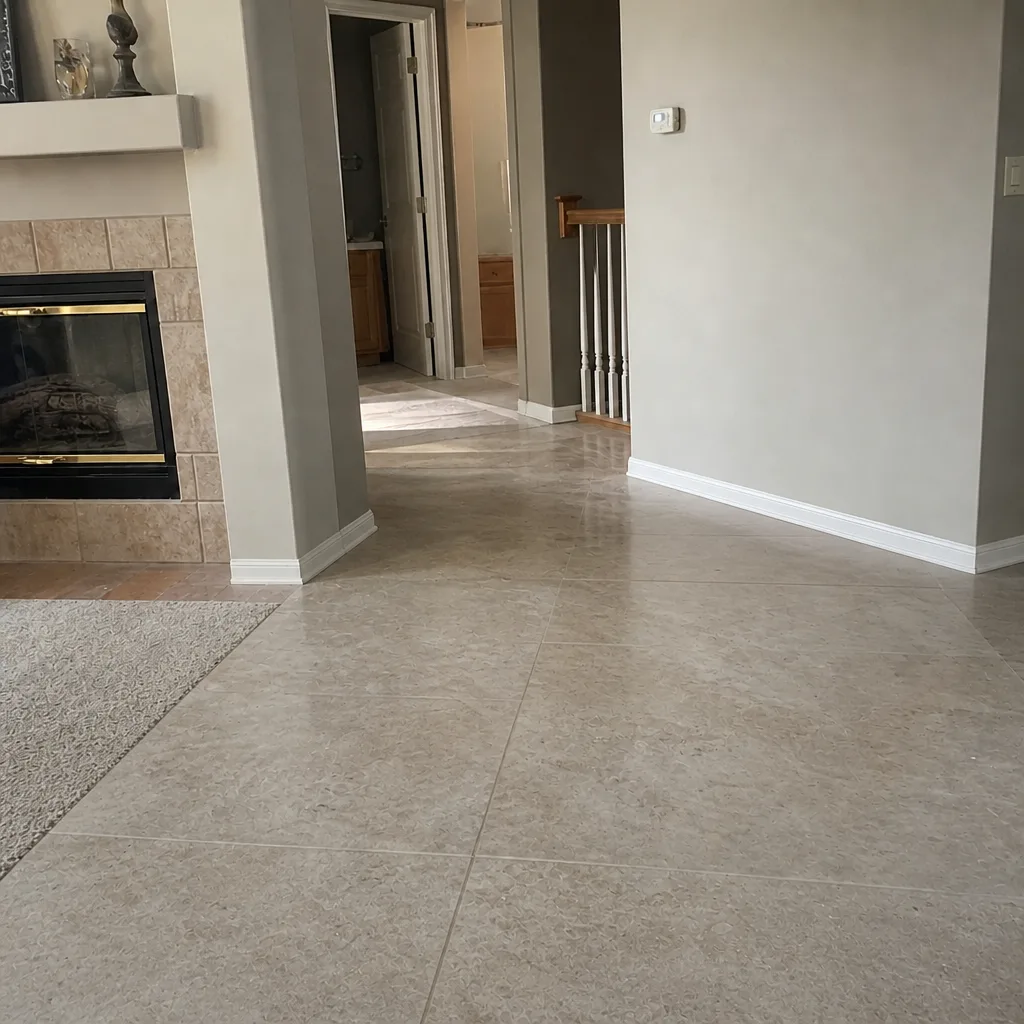 After
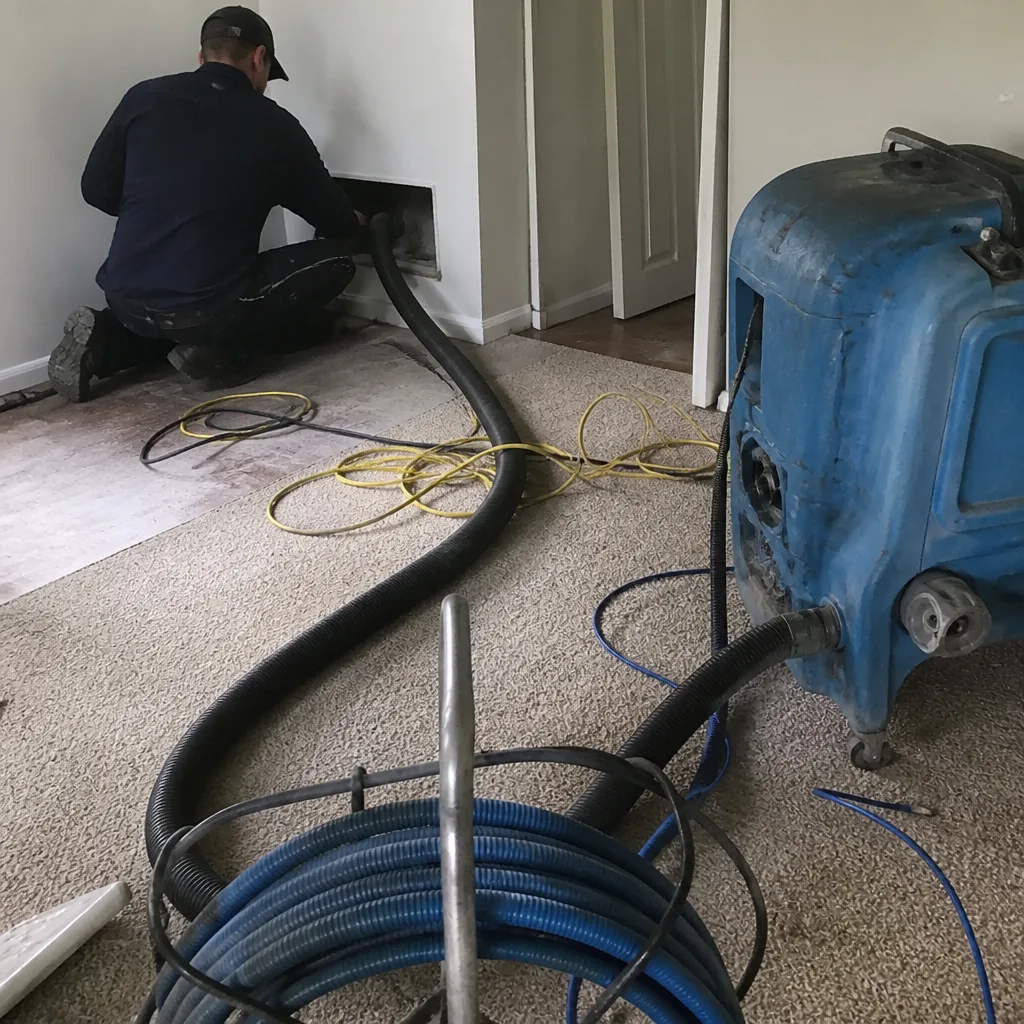 Before
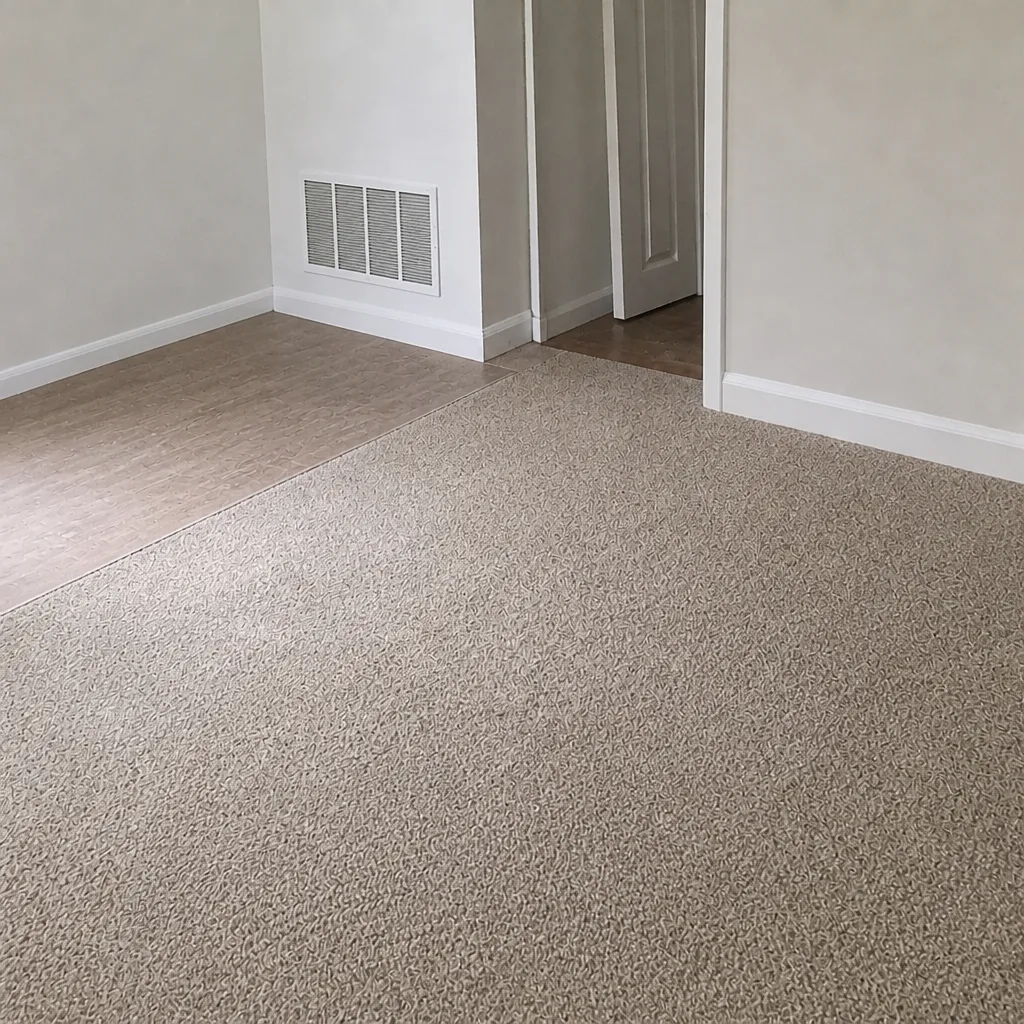 After
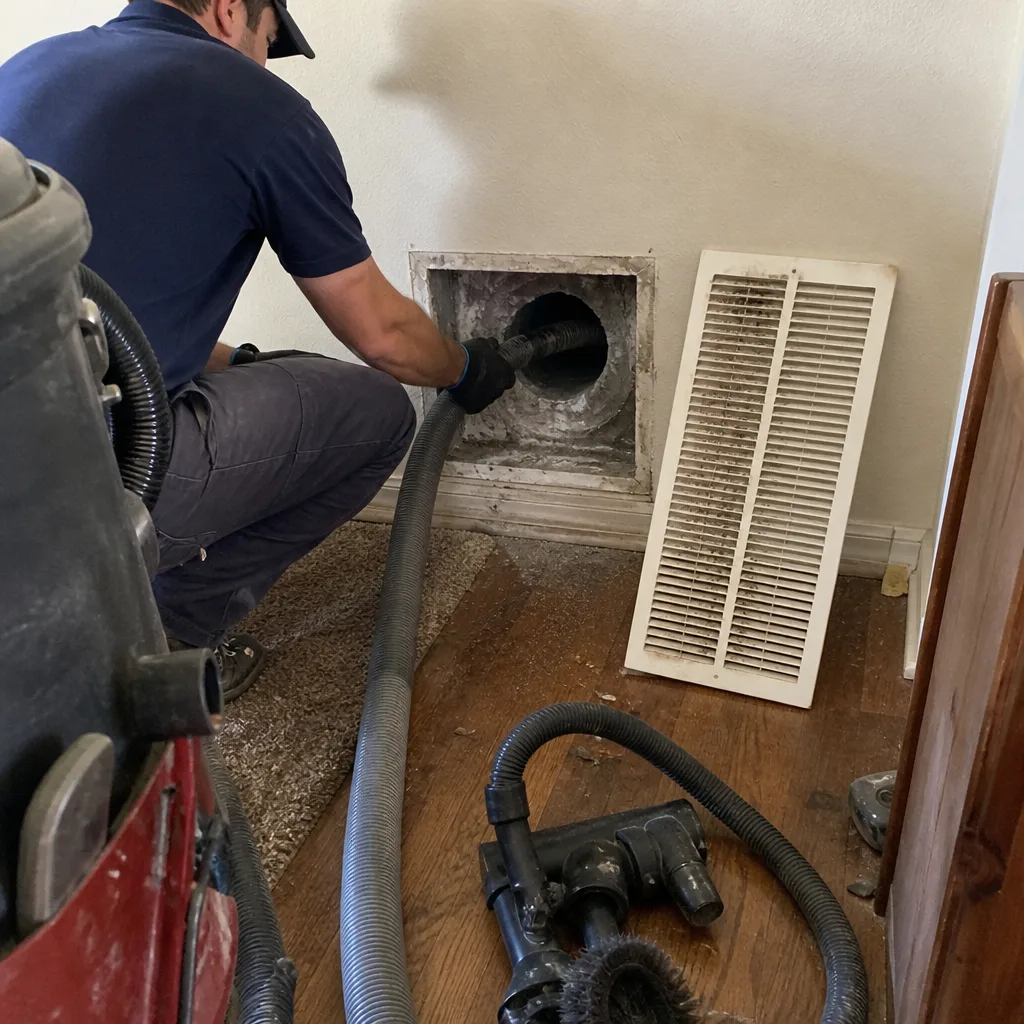 Before
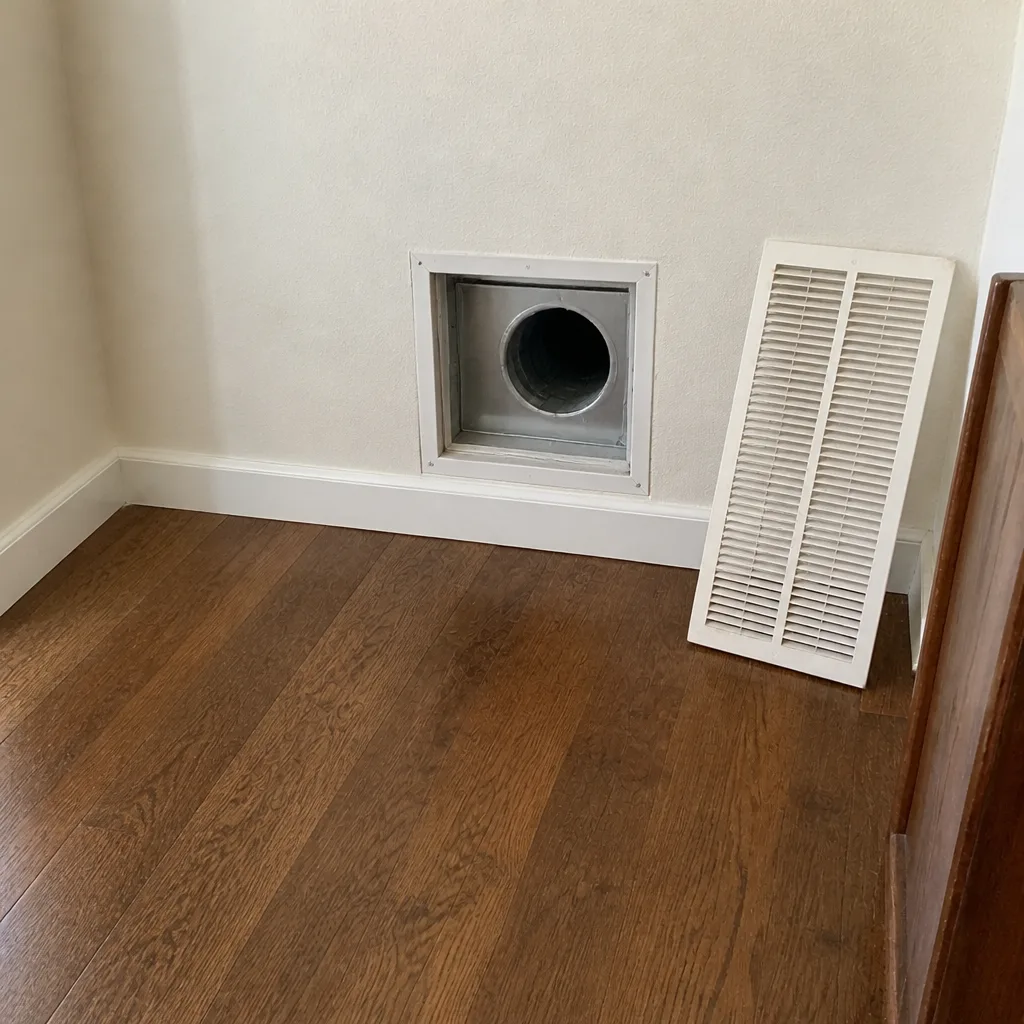 After
When to Call a Professional
Some signs point clearly to a professional job. If anyone in the house has allergies or asthma and the symptoms get worse when the heat or AC runs, the pathway deserves a look. If you’ve had a recent renovation, the return side has likely swallowed drywall and sawdust. If you have pets, the return side loads faster in Highlands Ranch’s dry air. If you’ve just bought a home and don’t know the duct history, get a full inspection before trusting it. Visible mold, musty odors from the vents, or a blower that sounds off are all reasons to stop waiting. Highlands Ranch Air Duct Cleaning Pros offers free estimates in Highlands Ranch, and our technicians have up to 14 years of experience. Call (833) 513-8872. We answer 24/7. Fast dispatch from 7am to 7pm, Sunday through Friday.
Frequently Asked Questions
There’s no fixed calendar, but homes with pets, allergy sufferers, or recent renovations tend to need it more often than the “every few years” rule of thumb suggests, especially in Highlands Ranch’s dry, high-altitude air. Have the system inspected and let the condition of the return side and air handler drive the decision. Call (833) 513-8872 for a free estimate.
Cheap quotes usually clean only the visible registers and skip the return side, air handler, blower, and coil. They also often skip HEPA containment, which means the dust gets stirred up rather than captured. A complete source-removal job costs more because it touches every component. Call (833) 513-8872 for an exact quote.
You should get before-and-after photos of your own ducts and airflow readings taken at the air handler. Ask how many openings your home has and how many were serviced, and ask whether the blower, coil, and drain pan were cleaned. A thorough crew can document all of it. Call (833) 513-8872 for a free estimate.
Often, yes. Leaky joints let outside air and debris back into the pathway within weeks, especially in a dry climate where material seams dry and pull open. Sealing the leaks in the same visit is what keeps the work from coming undone. Call (833) 513-8872 to ask about sealing alongside cleaning.
Contact cleaning uses a rotating brush to physically agitate debris off the duct wall. Negative-air uses HEPA vacuum pressure to capture and contain what’s dislodged. NADCA’s source-removal standard calls for both together, and that’s what our Rotobrush and Nikro equipment are set up to do. Call (833) 513-8872 for an exact quote.
Usually, yes, because the previous owner’s maintenance history is unknown, and any recent renovation likely pushed dust and debris into the return side. A full inspection and cleaning establishes a baseline you can trust. Call (833) 513-8872 for a free estimate.
The Bottom Line
Duct cleaning is not one event, it’s a full pass through a connected pathway, and the difference between a real job and a cheap one comes down to whether every component gets touched. The return side, air handler, blower, coil, and drain pan matter as much as the supply runs, and the equipment matters just as much: Rotobrush contact cleaning for agitation, Nikro HEPA for capture, Abatement Technologies for serious loads, and Honeywell or Aprilaire for filtration upgrades. In Highlands Ranch’s dry, high-altitude air, that pathway loads faster than most homeowners expect, and skipping the sealing step lets it refill within weeks. If you want proof the work was done, ask for photos and airflow readings.
If your system is overdue, we can look at it and give you a straight answer. The Highlands Ranch Air Duct Cleaning Pros team handles cleaning, dryer vents, HVAC cleaning, sealing, and air sanitizing as one connected service. Call (833) 513-8872 for a free estimate. We answer 24/7. Fast dispatch from 7am to 7pm, Sunday through Friday, and we’re closed Saturday.
Written by the team at Highlands Ranch Air Duct Cleaning Pros.