
Last updated November 24, 2026
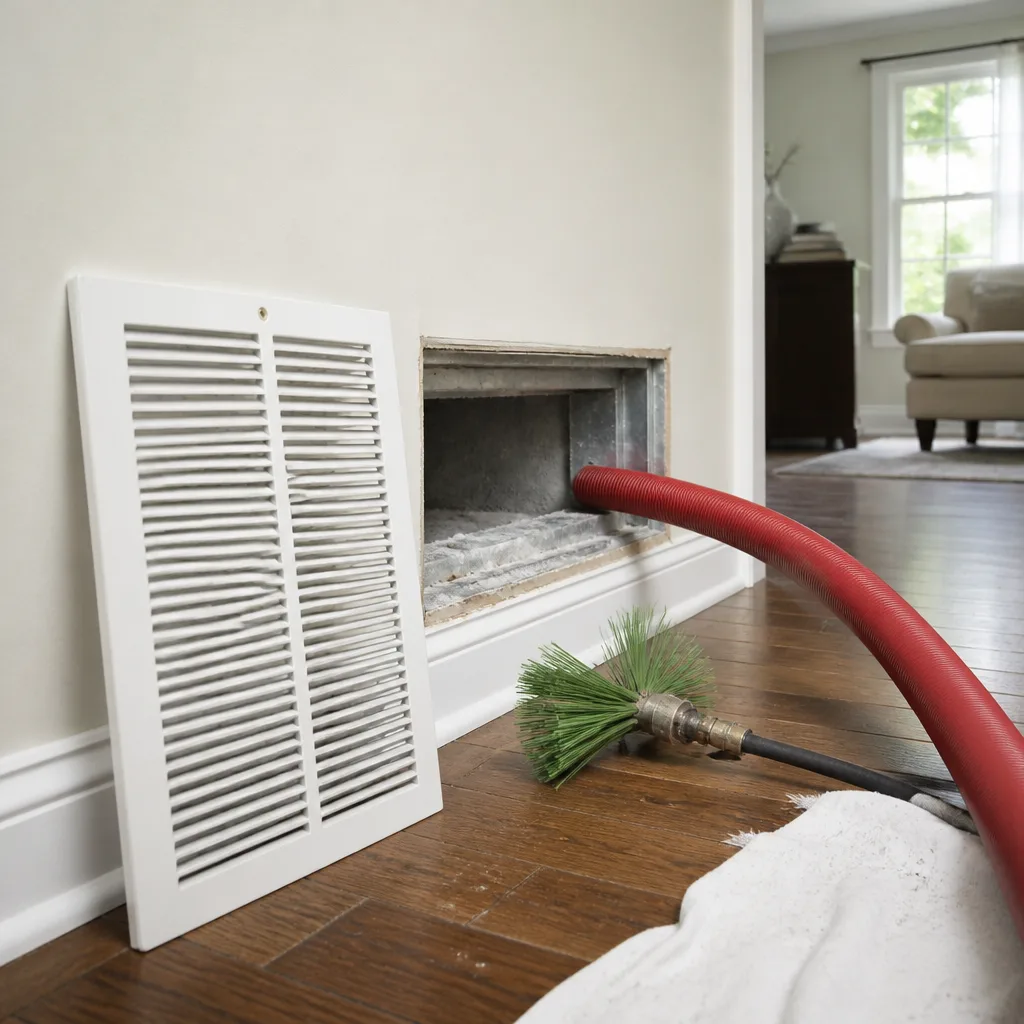 Whole-home duct cleaning
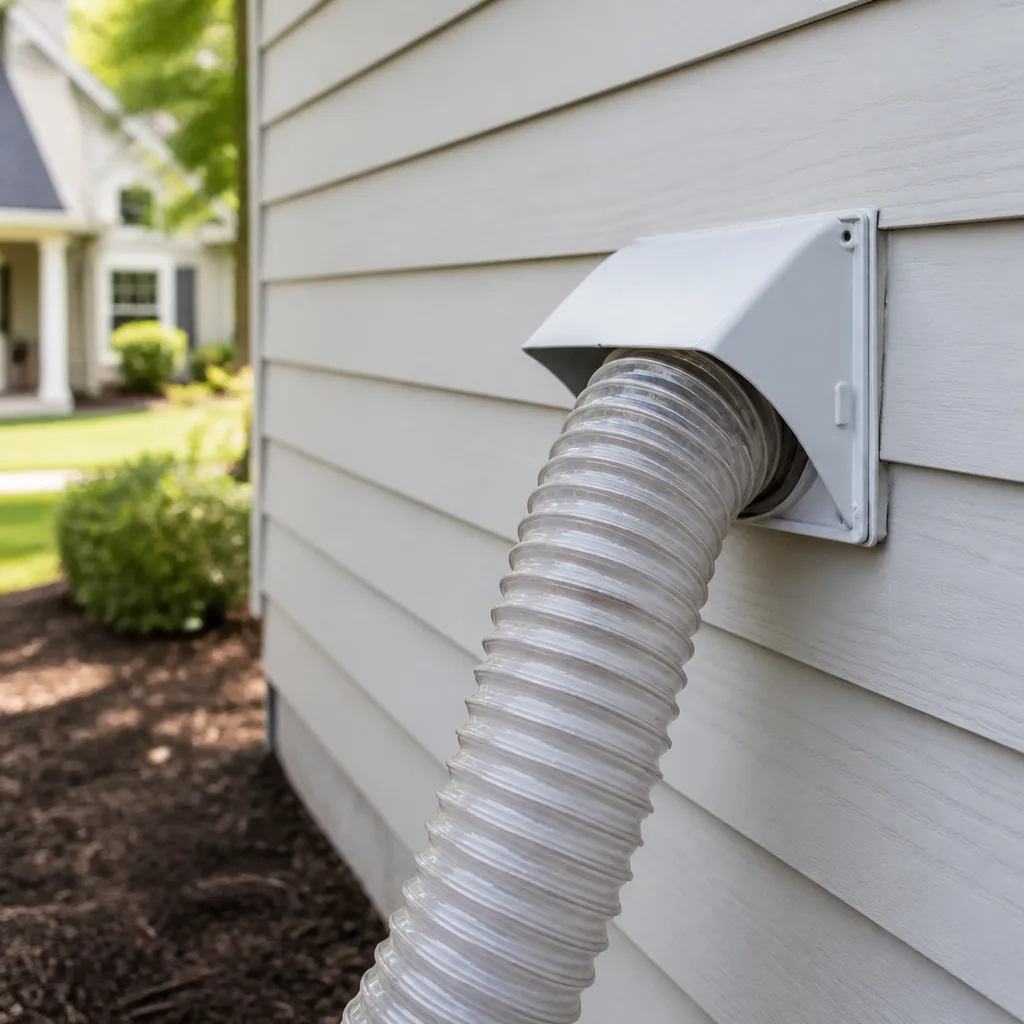 Dryer vent cleaning
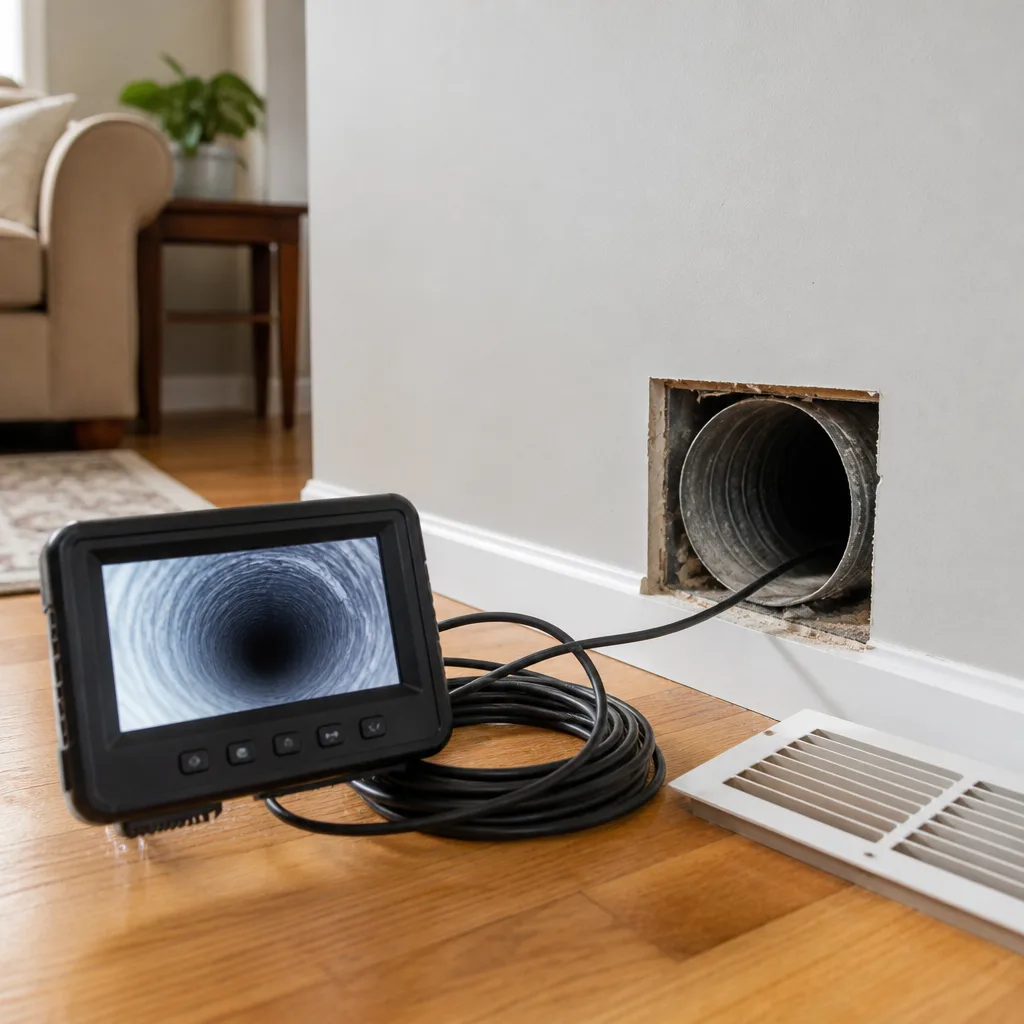 Camera inspection
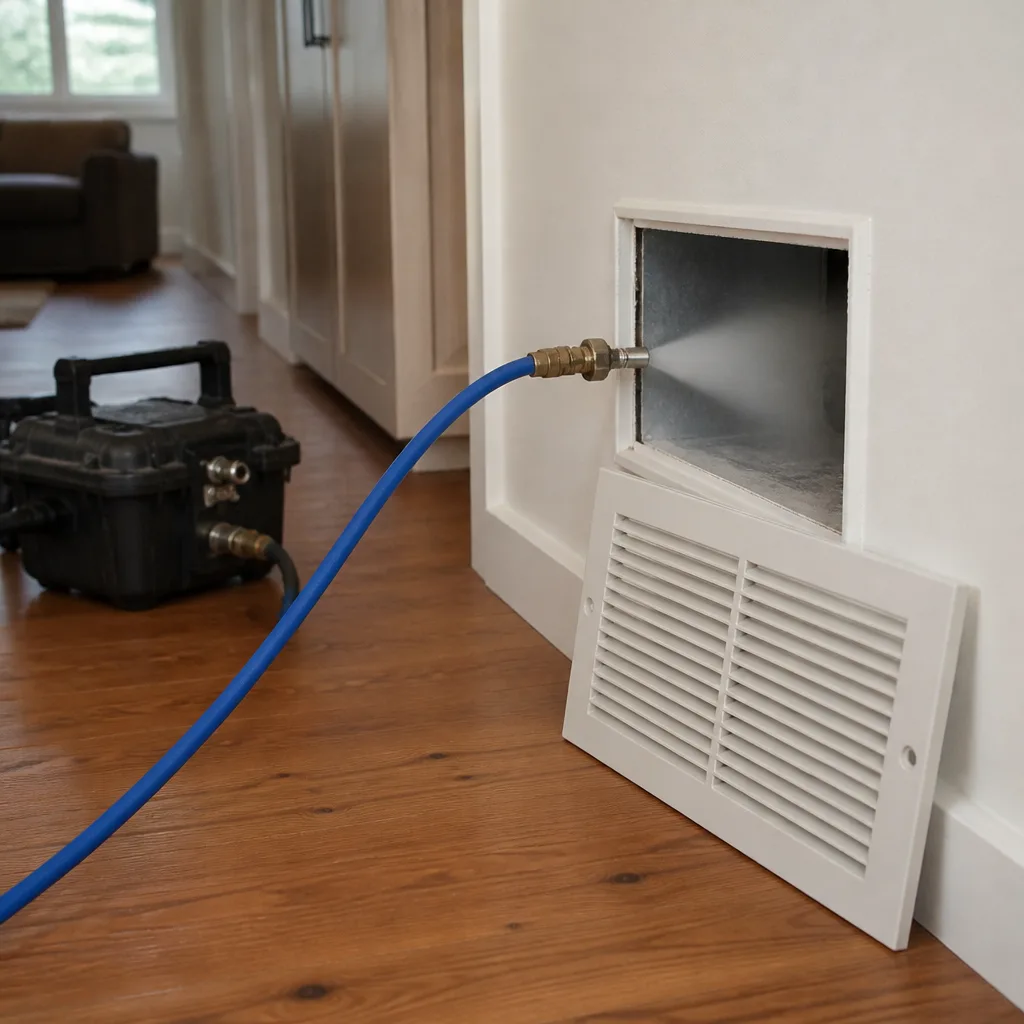 Sanitizing & deodorizing
Whole-system duct and dryer vent check with before-and-after photos - you see exactly what came out of your vents
That "$99 whole-house special" is a bait ad - the real number appears once they are in your hallway, or the "clean" is a shop-vac at the register. We photograph the inside of your ducts before and after instead.
DIY vs Professional Air Duct Cleaning: The Highlands Ranch Homeowner’s Decision Guide
A $60 dryer vent brush kit and a shop vac can legitimately clean a straight run of accessible duct. That’s not marketing spin – it’s just true. But the moment your system includes a plenum box, an air handler, or a return chase, you’ve hit the boundary of what DIY tools can reach. Nothing about that boundary is dangerous. It’s structural. Understanding exactly where your own duct layout crosses from “I can handle this” to “I’m just moving dust around” is the whole decision. In this guide, we’ll walk through what DIY genuinely accomplishes, where it becomes counterproductive, how Highlands Ranch homes differ in accessibility, and how to run the cost math honestly.
Quick Answer
DIY air duct cleaning works for register-level cleaning, grille washing, and accessible straight runs of duct you can physically reach. Professional cleaning is necessary once your system includes a plenum, air handler, coil, or trunk lines – components that require negative air pressure (a sealed vacuum pulling from a contained source) to clean without redistributing debris into your living space. Most Highlands Ranch homes with basement or attic systems fall into the professional category for the full air pathway, though a hybrid approach lets you keep costs down between service intervals.
Styles & brands we work with
- Whole-home duct cleaning
- Dryer vent cleaning
- Camera inspection
- Sanitizing & deodorizing
Table of Contents
- What DIY Air Duct Cleaning Can Actually Accomplish
- The Technical Boundary: Where DIY Becomes Counterproductive
- How to Assess Your Highlands Ranch Home’s Duct Layout
- DIY vs Professional: The Honest Cost Math
- The Hybrid Approach: Maintenance Between Professional Cleanings
- What a Professional Cleaning Actually Involves
- Common Mistakes to Avoid
- When to Call a Professional
What DIY Air Duct Cleaning Can Actually Accomplish
We want to be precise about this because the duct cleaning industry has earned some of its skepticism. DIY isn’t useless. It’s limited to specific, register-level work that a motivated homeowner can do with hand tools and a shop vac. Here’s what’s genuinely within reach:
- Register and grille removal and washing. Unscrew the supply registers and return grilles, soak them in a tub with dish soap and warm water, dry them completely, and reinstall. This alone removes a meaningful layer of surface dust and grime that builds up on any Highlands Ranch home’s visible vent faces.
- Register boot and first-foot cleaning. The “boot” is the metal or flex section directly behind the register, before the duct turns. You can reach into it with a flexible brush, a vacuum hose extension, or a hand-held crevice tool. This is real cleaning of a short, accessible section.
- Accessible straight runs of rigid duct. If you can remove a register, look down the duct with a flashlight, and see a straight, unobstructed run, a long flexible brush (available at most hardware stores) plus a shop vac at the register end can clean it. Emphasis on straight and accessible.
- Dryer vent lint removal from the outside. If your dryer vent exits on an exterior wall you can reach, pulling lint from the outdoor termination with a vent brush is useful maintenance. The full vent cleaning job belongs in our dryer vent cleaning guide because the transition duct and interior runs carry real fire-load risk.
- Return grille filter changes. If your system has a filter grille on the return side, changing the filter is a legitimate DIY maintenance task with measurable impact on air quality.
Notice what all of this shares: visible, physical, register-level access. Every item on that list lives at the edge of your system, not inside it. That’s the ceiling of DIY, and it’s a real ceiling. What it doesn’t reach is what comes next.
The Technical Boundary: Where DIY Becomes Counterproductive
This is where the conversation gets honest. Once you move past the register boot, you’re inside a system that was engineered for sealed, pressurized air movement. Your tools were not. Here’s the specific boundary:
The Plenum Box
The plenum is the large chamber directly above or below the furnace/air handler where the main trunk duct attaches. It collects air from the whole system before it enters the equipment. Plenums collect dust, lint, and debris because they’re a dead zone in terms of airflow velocity. A shop vac on the register end can’t reach inside them. A rotary brush requires entry from the equipment side, which is sealed. Cleaning a plenum properly means opening it in a controlled way, vacuuming under negative pressure, and resealing it – work that’s outside DIY scope and shouldn’t be attempted without knowing how to reseal duct board and sheet metal to standard.
The Air Handler and Blower Compartment
The air handler contains the blower wheel, the filter slot, and often the evaporator coil (if it’s an A/C system) or the heat exchanger (if it’s a furnace). This compartment is the single dirtiest section of a typical duct system after years of service. DIY hands don’t belong in here. The blower wheel is a mechanical component with stored rotational mass, and the electrical connections are live. The coil requires fin comb work and chemical-safe coil cleaner. We handle this section as part of HVAC cleaning – it’s not a duct job in the DIY sense, it’s an equipment service call.
The Evaporator Coil
A wet A/C coil catches everything the filter misses, and dust that collects on a wet coil sticks permanently. A shop vac can’t clean it without bending fin faces (which degrades heat transfer) and can’t clean it at all where the coil is boxed in. Coil cleaning needs low-pressure coil-safe solutions applied from the access side, with the drain pan and drain line checked after.
Trunk Lines and Return Chases
Trunk lines are the large ducts feeding multiple branches, and return chases are the wall or floor cavities that return air to the unit. Both need negative air pressure – a HEPA vacuum sealed to an access port, with the blower off – to clean without redistributing debris. Here’s the critical point: if you push air through a dirty trunk line from one register without containment on the other end, you push debris into the rest of the system, into the coil, and into the living space. That’s the counterproductive part. DIY on a sealed, multi-branch system can make things worse before it makes them better.
The professional boundary, in one line: anything that requires negative-pressure containment or mechanical agitation of the duct wall is not a DIY job.
How to Assess Your Highlands Ranch Home’s Duct Layout Before Deciding
Highlands Ranch homes aren’t uniform. The duct accessibility in a 1990s two-story with a basement mechanical room differs enormously from a newer build with an attic air handler. Before you decide anything, do this assessment.
- Find the air handler. Look in the basement, garage mechanical closet, crawlspace, or attic. Note whether the unit is in conditioned space (inside the envelope) or unconditioned (attic or garage). Attic units in Highlands Ranch have longer, hotter-cycling supply runs and often more flexible duct with more joints – both factors that increase debris trapping and reduce DIY access.
- Trace a supply register back to the trunk. Remove one supply register on the floor or ceiling. Shine a flashlight down the boot. Can you see a straight rigid section, or does the duct immediately turn, flex, or disappear into a wall cavity? Straight rigid = potential DIY. Immediate turn or flex = not DIY.
- Count your returns. A single large return grille in a hallway is common in Highlands Ranch two-stories and indicates a central return chase. Central return chases are basically never DIY-accessible – they require controlled entry from the mechanical side.
- Check for a filter grille. If your only filter is at the air handler, your system relies on duct sealing for indoor air quality – a sign the whole pathway needs professional attention. If you have a return-side filter grille, that’s easier to maintain yourself.
- Look for previous service access. Small metal patches, taped seams, or round access ports in the ductwork suggest a prior professional cleaning. Duct history matters when you buy a Highlands Ranch home – our air duct cleaning page covers what to ask before purchase.
- Note the age of the home and any recent renovations. Drywall dust, construction debris, and post-renovation drywall fines get pulled into return air for weeks. A renovation in the last 18 months is a strong signal the system needs more than DIY.
If you complete this assessment and land on the “attic unit, single central return, coil at the air handler” combination, you’re in professional territory. If you land on “basement unit, accessible straight runs, easy register access”, a hybrid DIY approach is genuinely viable for maintenance cleaning.
DIY vs Professional: The Honest Cost Math
Here’s the part most guides skip. DIY is not automatically cheaper than professional cleaning – it depends entirely on whether the DIY work accomplishes the same outcome. When it doesn’t, you’ve spent money on supplies and still need the professional job, or worse, you’ve moved dust around without reducing the total debris in the system.
DIY Supplies (One-Time or Ongoing)
- Shop vac (if not already owned): $80-$150
- Flexible duct brush set (register-scale): $30-$60
- Long flexible duct brush for straight runs: $40-$90
- Register cleaning supplies, dish soap, microfiber cloths: $20-$40
- HEPA shop vac filter upgrade (recommended): $30-$60
- Replacement filters (annual): $50-$150 depending on filter grade
So a homeowner starting from zero tool inventory spends roughly $250-$550 on supplies before touching a duct. Those tools are reusable, so the per-year cost drops fast – good news if your system is genuinely DIY-accessible. Bad news if it isn’t, because those tools don’t reach the plenum, coil, or trunk lines regardless of budget.
Professional Cleaning (Whole-System)
- Whole-home air duct cleaning (typical Highlands Ranch 2,000-3,000 sq ft home): estimated $350-$700
- Add HVAC air handler and coil cleaning: estimated $150-$350 additional
- Add sanitizing treatment after cleaning: estimated $100-$250 additional
- Add duct sealing if leaks are found: priced per job after inspection
Every figure above is a typical range for the Front Range market and is not a quote. The final price is set by the written estimate after the technician walks the system. One flat price per system, agreed before work starts.
The Comparison
The honest comparison: if your home has easy-plenum access, straight trunk runs, and register-level cleaning solves your concern, DIY at $250 in supplies pays for itself in a single weekend, and you might not need a professional job for years. If your home has the more common Highlands Ranch configuration – attic air handler, central return chase, boxed coil – you’ll spend $250-$550 on DIY tools that clean 10-15% of the system, then call a professional within 12 months anyway. The math there says skip the middle step. Better yet, invest in the professional job first, then use a modest tool kit to maintain what was cleaned.
The Hybrid Approach: Maintenance Between Professional Cleanings
The best model for most Highlands Ranch homeowners isn’t pure DIY or pure professional. It’s a professional baseline followed by legitimately DIY maintenance that extends the interval before the next professional cleaning. Here’s how it works:
- Get the system professionally cleaned once, fully. Duct cleaning plus HVAC air handler and coil cleaning, done with rotary contact cleaning (Rotobrush systems physically agitate debris off the duct wall rather than just pushing air). This establishes a known baseline: you know the system is clean because you saw before-and-after photos of the actual ducts.
- Maintain register-level cleaning every 3-6 months. Wipe down supply registers, vacuum return grilles, and vacuum the first six inches of any accessible boot with a crevice tool.
- Change the filter on the right schedule. A 1-inch filter changes monthly; a media filter (Aprilaire-style, 4-5 inches) every 6-12 months. Filter performance is the biggest lever on indoor air quality between cleanings. Honeywell and Aprilaire are the two brands we recommend most often when homes want a filter upgrade, and the same crew doing the cleaning can install one.
- Handle the dryer vent yourself only at the outside termination. Clear the exterior flap lint monthly. The full vent run – transition duct, wall cavity, and flexible sections – needs professional equipment to clean safely. Dryer vent lint is one of the leading causes of residential fires, and it’s not a place to save $100.
- Reassess after major events. A renovation, a new pet, a water intrusion, or a new-home purchase is a signal to schedule professional cleaning again. Air pathways that were clean stay clean for 3-7 years in a typical Highlands Ranch home with reasonable filtration; they don’t stay clean after drywall dust gets pulled into every return.
Under this model, most Highlands Ranch households land at one professional cleaning every 3-5 years plus modest DIY maintenance. That’s the lowest lifetime cost for a genuinely clean system.
What a Professional Cleaning Actually Involves
If you’re going to pay for professional cleaning, you deserve to know what “professional” means in equipment terms. Here’s the actual difference between a thorough job and a discount crew with a shop vac:
- Negative-air HEPA containment at the source. Nikro HEPA-rated vacuum systems capture dislodged particulates at the cleaning point so they leave the duct into a filter, not into your living room air. Every job we run uses this setup. Without it, you’re paying to redistribute dust.
- Rotary contact cleaning on the duct interior. Rotobrush rotary systems use a spinning brush plus simultaneous vacuum to physically agitate debris off the duct wall. Air-only methods push free dust but leave the adhered coating in place on rough surfaces, flex duct corrugations, and duct board.
- Abatement Technologies containment for heavy contamination scenarios. Mold-suspect situations, post-remediation air pathway cleaning, and heavy debris jobs call for more aggressive containment. Abatement Technologies equipment is what’s on hand for those jobs, and it’s equipment most single-service duct cleaners don’t own.
- Source protection during service. Guardsman surface-protection products go down before equipment comes out of the truck, so floors and finishes are covered while hoses are in the home.
- Before-and-after photos of your own ducts. This is the single most important verification step. Ask to see photos before you pay, and compare them to photos taken at the same access points after. A crew that can’t produce them didn’t document the work.
- The full air pathway in one visit. Cleaning that ends at the ducts and skips the coil, blower, and air handler leaves the dirtiest components untouched. One crew handling duct cleaning, HVAC cleaning, dryer vent cleaning, repair and sealing, and sanitizing means you’re not coordinating between contractors and nobody’s pointing at the other guy.
If you’re comparing local duct cleaners in Highlands Ranch, ask each one: what vacuum system do you run, will you show me before-and-after photos of my own ductwork, and does the price cover the air handler? The answers separate thorough jobs from superficial ones quickly.
Common Mistakes to Avoid
- Buying a $40 “duct cleaning” attachment for your shop vac and considering the job done. Those attachments clean about a foot past the register, then lose suction through the long hose. They convince you the ducts are clean when they’ve barely touched the system.
- Running the air handler while vacuuming without containment. If the blower is running and you’re pushing air through one register, you’re moving dust into the coil and return side. Turn the system off before doing any DIY work inside a duct.
- Assuming a Highlands Ranch home’s attic system is DIY-friendly because the registers are on the ceiling. Ceiling registers on an attic-handler system usually lead to flex duct that disappears behind drywall within two feet. Accessibility is about the duct path, not the register location.
- Skipping the HVAC air handler and coil entirely. Cleaning only the supply ducts while the evaporator coil stays coated is a partial job. Most of the biology a homeowner is worried about lives at the coil, and no DIY tool reaches it safely.
- Accepting the cheapest quote without equipment questions. A quote that’s $200 lower is usually a crew without a HEPA-vacuum containment system or a rotary contact cleaner. Ask the equipment question in writing.
- Assuming duct cleaning is a substitute for filter maintenance. A thorough professional cleaning followed by a neglected 1-inch filter will look like a clean system with a clogged filter within three months. The filter schedule matters more than the cleaning frequency for ongoing air quality.
- Not checking whether the ducts were ever cleaned in a home you just bought. New Highlands Ranch homeowners with unknown duct history are exactly the households that should start with a professional assessment rather than DIY, because you don’t know what’s in the system – construction debris, drywall dust from the last renovation, or the previous owner’s pet hair.
- Using a leaf blower or compressed air in a duct. This is the single worst DIY idea in the category. It moves every particle in the system into the air you breathe, with no containment.
See the difference
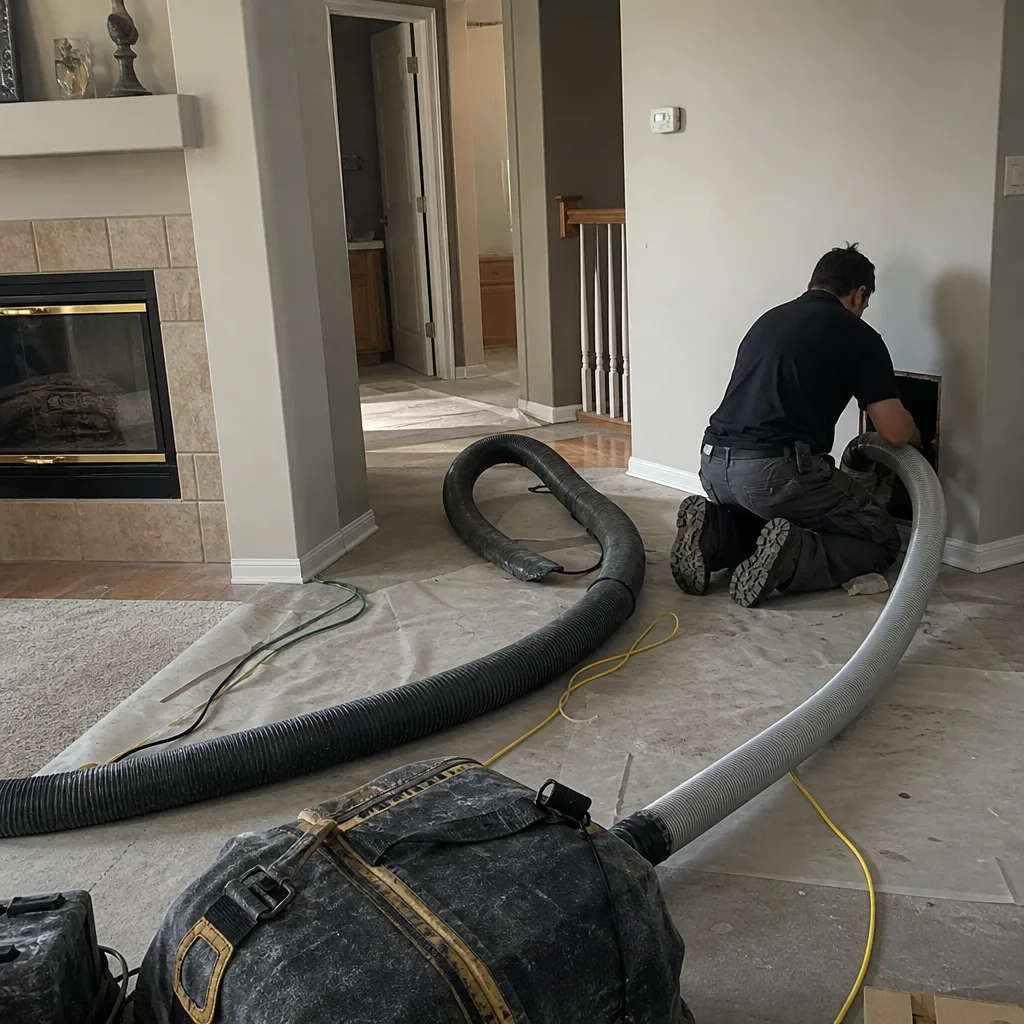 Before
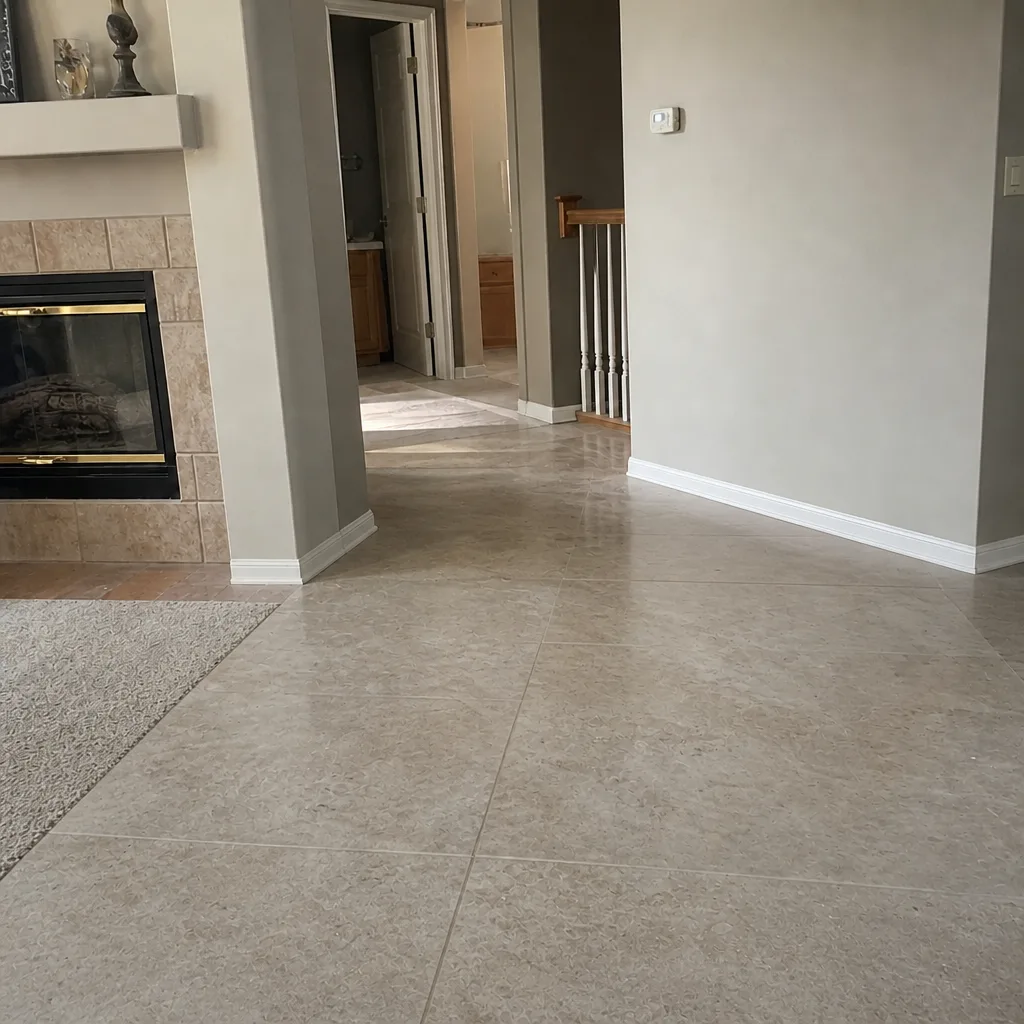 After
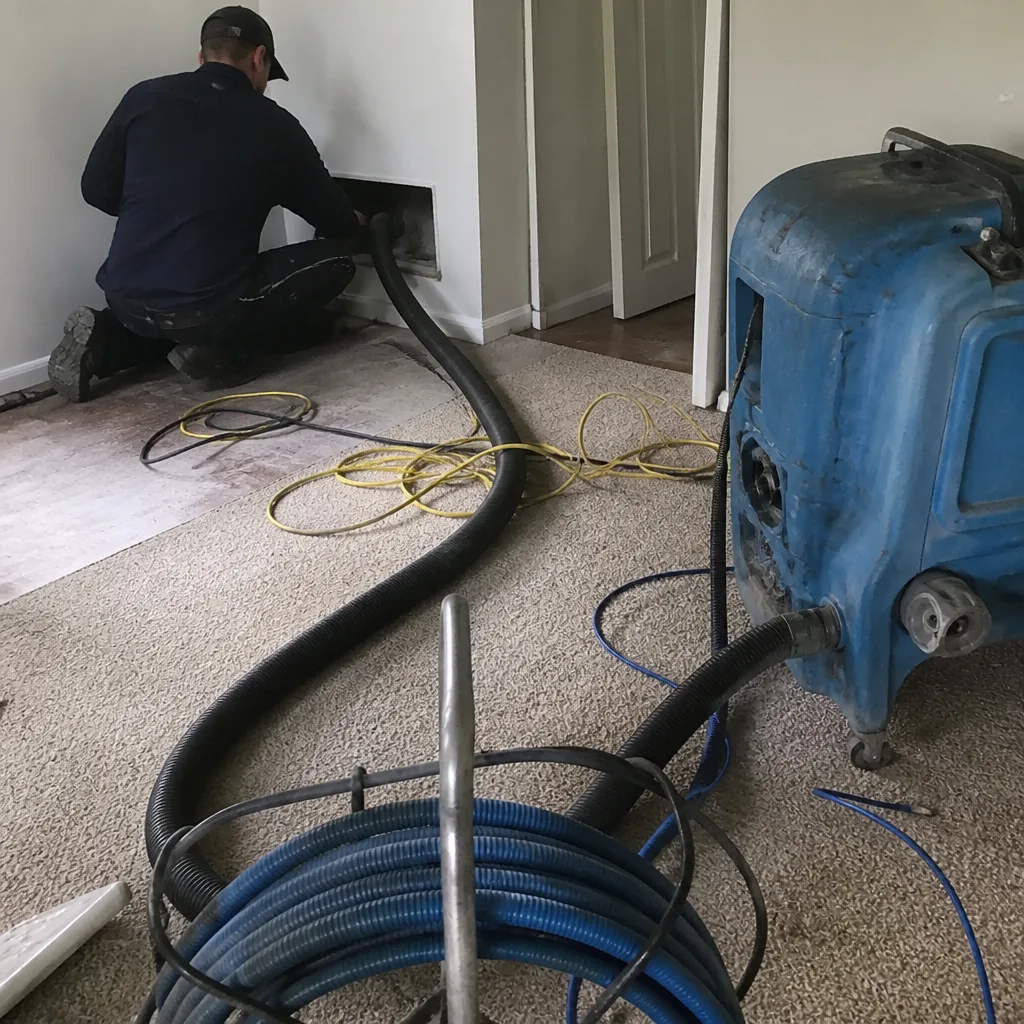 Before
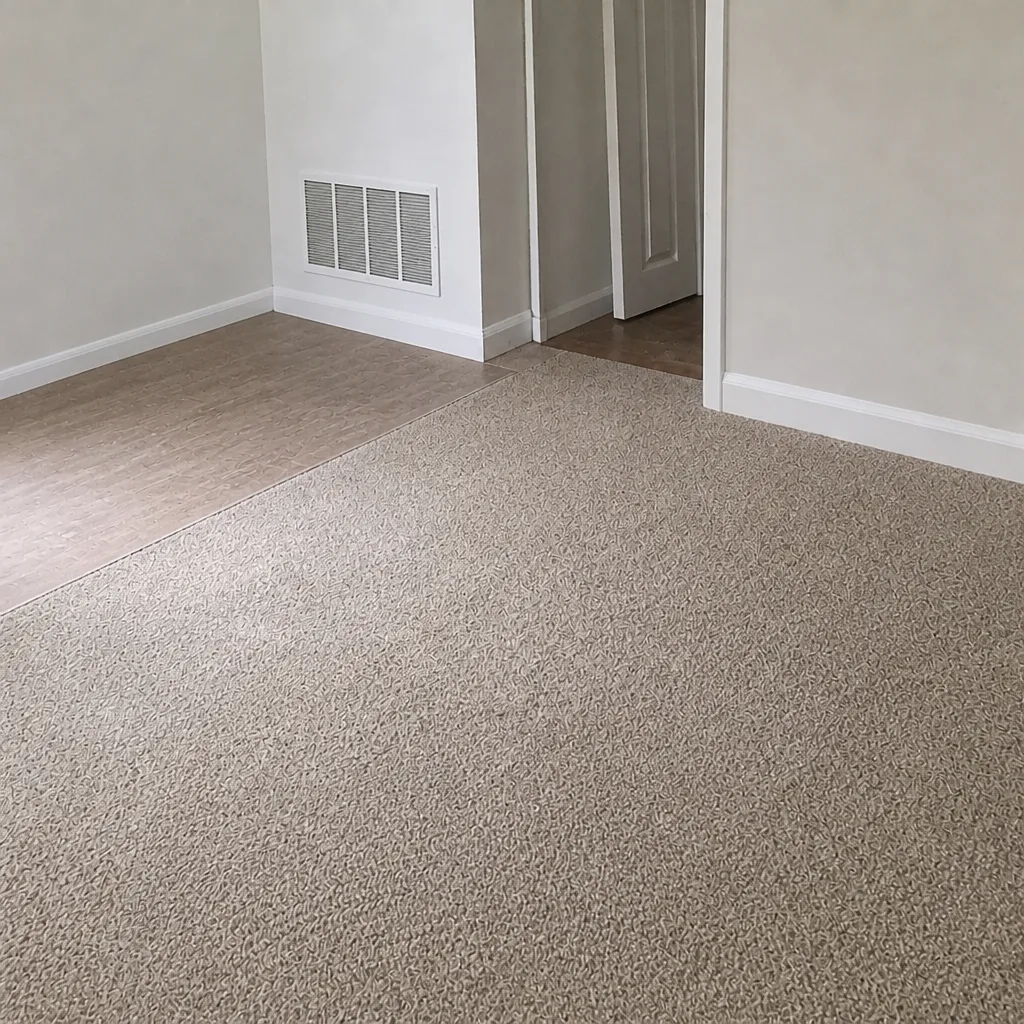 After
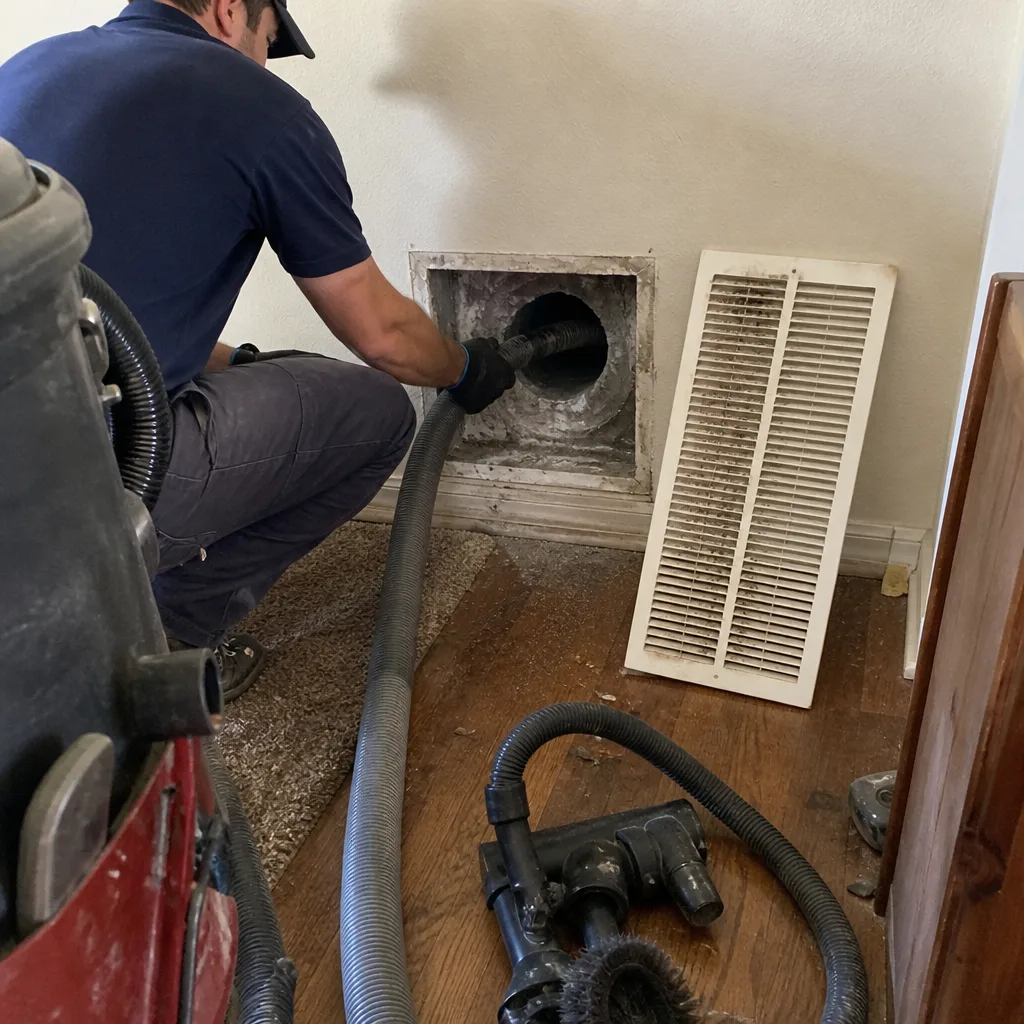 Before
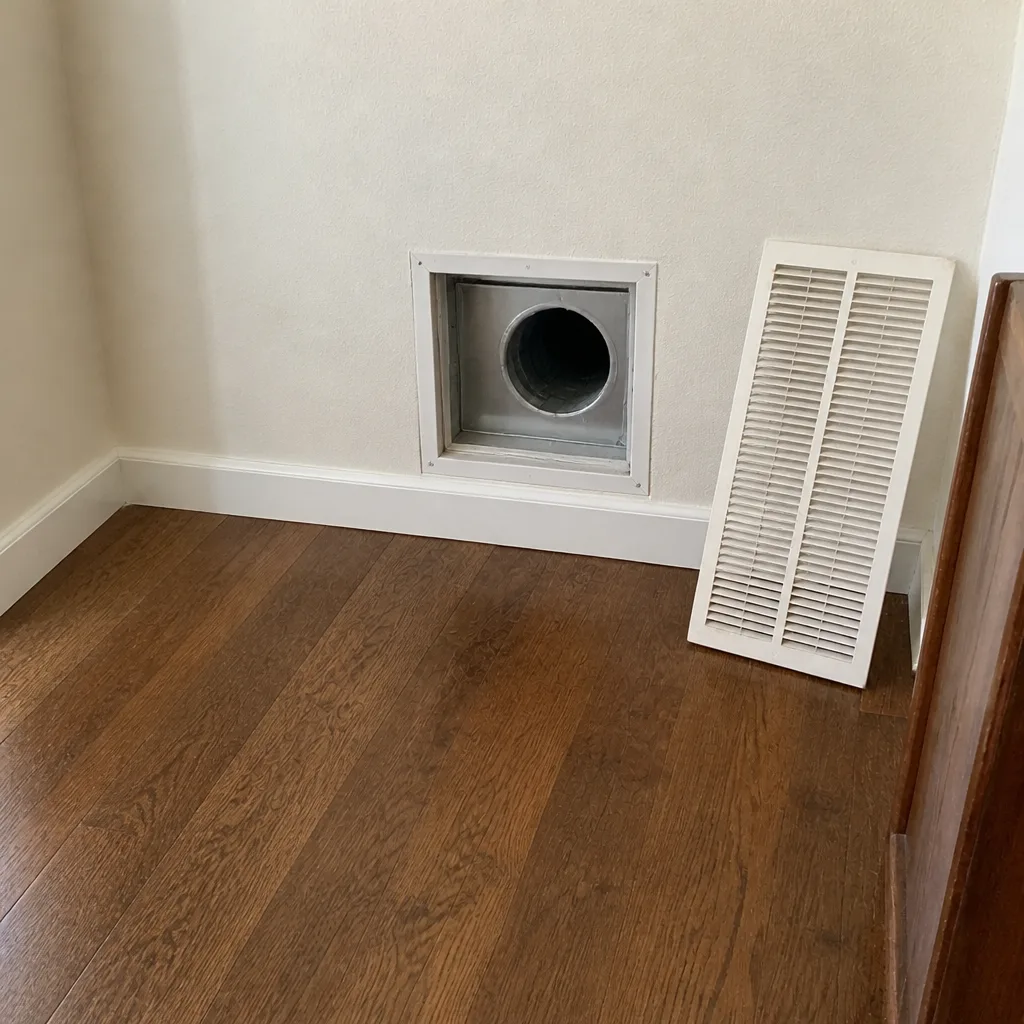 After
When to Call a Professional
Some situations should point straight to professional cleaning rather than a hybrid approach. If any of these apply to your Highlands Ranch home, DIY won’t move the needle: recent renovation in the last 18 months (drywall fines); a new-home purchase with unknown duct history; a visible mold smell or musty odor when the system runs; visible dust plumes from a register when the blower starts; allergy or asthma symptoms that worsen when the HVAC runs; pets in the household; water intrusion or a flooded basement near ductwork; or a dryer that’s taking noticeably longer to dry clothes (a strong sign the vent needs professional clearing). Any single one of those is enough to justify a professional walkthrough. For category-level guidance on the broader service, see our Highlands Ranch air duct cleaning pros homepage.
Highlands Ranch Air Duct Cleaning Pros offers free estimates in Highlands Ranch – call (833) 513-8872. We answer 24/7. Fast dispatch from 7am to 7pm, Sunday through Friday.
Frequently Asked Questions
DIY register-level cleaning is safe. The risk enters once you’re working past the register into flex duct, near the blower, or around the coil: you can damage duct tape seals, bend evaporator coil fins, or push debris into the coil without containment. Turn the air handler off before doing anything inside a duct, wear an N95, and stay at the register and boot level. Anything deeper is a professional job. Call (833) 513-8872 for an exact quote – estimates are free.
Whole-home air duct cleaning for a typical Highlands Ranch 2,000-3,000 sq ft home runs an estimated $350-$700 depending on system size and accessibility. Adding HVAC air handler and coil cleaning typically adds an estimated $150-$350, and sanitizing treatment after cleaning adds an estimated $100-$250. Every figure is a typical range – the final price is set by the written estimate after a technician walks the system. Call (833) 513-8872 for an exact quote – estimates are free.
Every 3 to 7 years is a reasonable interval for most Highlands Ranch homes with good filter maintenance and no pets, renovations, or health concerns driving it. Homes with pets, allergy or asthma households, or a recent renovation land closer to the 3-year end. Homes with a well-maintained professional-grade filtration system can push toward the 7-year end. Call (833) 513-8872 for an exact quote – estimates are free.
Cheap quotes usually reflect missing equipment: no HEPA vacuum containment, no rotary contact cleaning, or a per-vent pricing model that incentivizes rushing through registers. A contractor doing a proper job runs a Nikro HEPA vacuum, rotary contact-cleans the duct walls, includes the air handler in the price, and shows before-and-after photos of your own ducts. When those items are absent, the cheaper invoice reflects a smaller job, not a better deal. Call (833) 513-8872 for an exact quote – estimates are free.
Before-and-after photos taken through your own registers and access ports are the single verification tool that matters. Ask to see them before you pay, and if a crew can’t produce them, the job wasn’t documented. A rotary contact cleaning job also visible in the photos: the duct wall looks abraded-and-vacuumed, not just air-blown. Call (833) 513-8872 for an exact quote – estimates are free.
You can clear the lint at the outdoor termination flap yourself, and that’s useful monthly maintenance. The transition duct behind the dryer and the interior wall cavity vent run need professional equipment to clean properly without risking disconnect or lint compaction in a concealed section. Dryer vent fires are almost always lint buildup in those concealed runs, not at the outside flap. Call (833) 513-8872 for an exact quote – estimates are free.
Yes, meaningfully. Slab-on-grade Highlands Ranch homes often have a duct chase inside the walls or in the ceiling, and the air handler is frequently in a garage closet or attic. Basement homes typically have the air handler in the basement with more accessible trunk and plenum entry. Slab homes generally have less DIY-accessible duct than basement homes of similar square footage. Our technicians have up to 14 years of experience assessing both configurations. Call (833) 513-8872 for an exact quote – estimates are free.
The Bottom Line
DIY air duct cleaning has a real, useful place: register cleaning, grille washing, accessible straight runs, and filter maintenance. It’s genuinely worth doing, and it costs very little when you start with a clean system. But DIY has a hard structural ceiling at the register boot, and once your system includes a plenum, air handler, coil, or return chase – which most Highlands Ranch homes do – DIY can’t clean what matters most, and worse, can redistribute it. The honest decision is: hybrid if you’re already on a professional maintenance cycle, professional-only if you’ve never had the system cleaned or you’ve bought a home with unknown duct history. The final price is set per job by the written estimate, and the estimate is free.
Contact Highlands Ranch Air Duct Cleaning Pros today at (833) 513-8872 for a free estimate on whole-system cleaning. We answer 24/7. Fast dispatch from 7am to 7pm, Sunday through Friday. Ask for before-and-after photos in your estimate – we’ll show you exactly what we’ll do to your ducts before any work starts, and the price is one flat number agreed in advance. Our technicians have up to 14 years of experience working with the equipment brands that separate a thorough cleaning from a superficial one: Rotobrush rotary contact cleaning, Nikro HEPA vacuum capture, Honeywell and Aprilaire filtration upgrades, and Abatement Technologies containment for heavier contamination jobs. One crew, start to finish, on the full air pathway.
Written by the team at Highlands Ranch Air Duct Cleaning Pros.